General
The General page shows information about the deployment and lets you configure it:- Deployment summary - the deployment’s name, type, region, deployment class, the running Bijection version, and when it was last deployed and backed up. It also shows the URL the deployment is hosted at and the URL that HTTP Actions are served from. (Some Bijection integrations require these URLs for configuration.)
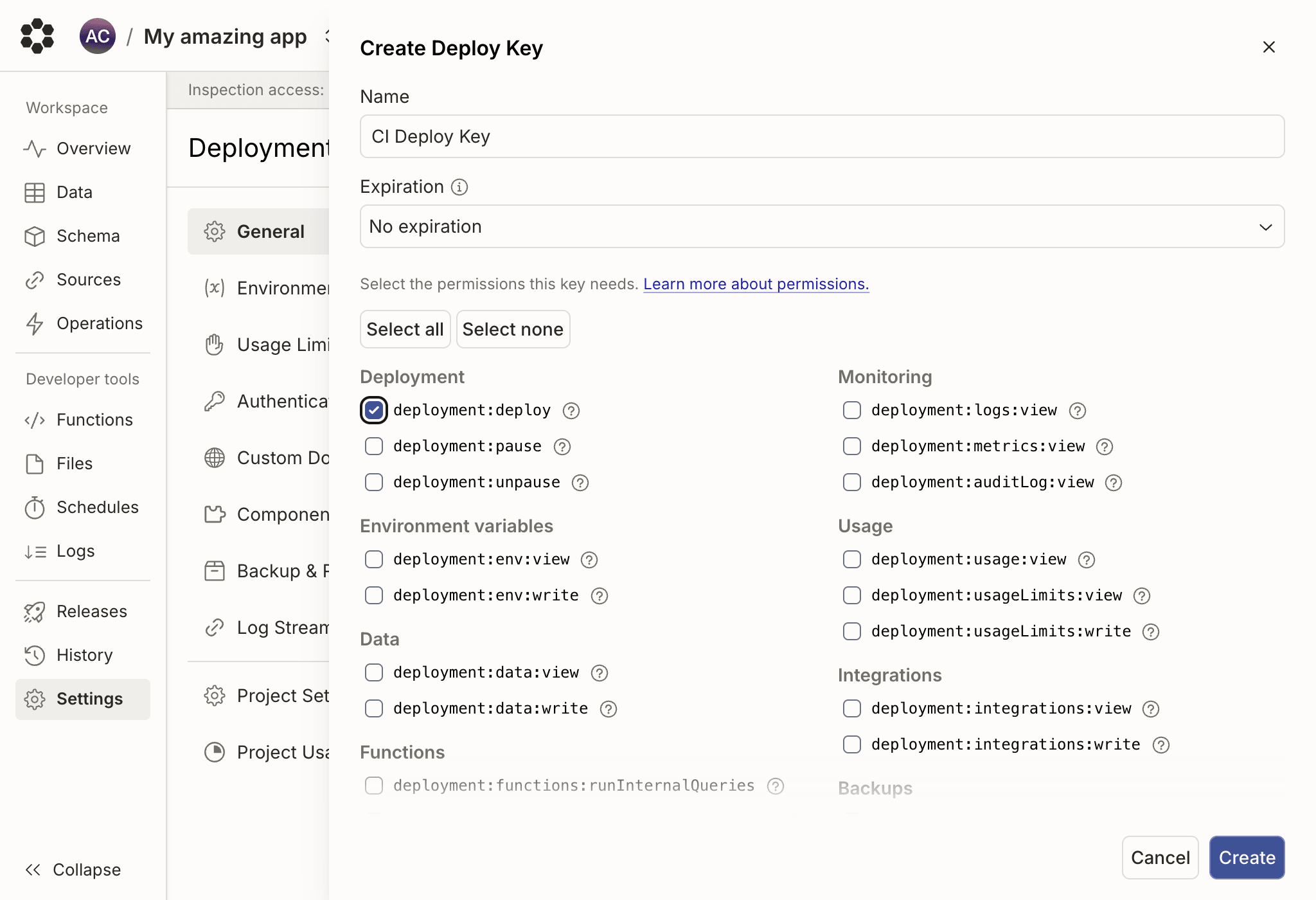
- Deploy keys - generate, view, and delete the deployment’s deploy keys, used to integrate with build tools such as Netlify and Vercel and to sync data with Fivetran and Airbyte.
- Advanced settings
- Deployment reference - edit the deployment’s reference.
- Stream function logs - control whether function logs are streamed to connected clients.
- Dashboard edit confirmation - require confirmation before editing data from the console.
- Deployment expiration - for non-production deployments, set an expiration time after which the deployment is automatically deleted.
- Pause deployment - temporarily stop the deployment from running any functions (including scheduled functions and cron jobs), then resume it later.
- Delete deployment - permanently delete the deployment and all of its data.
- Transfer deployment - move the deployment to another project in the same team.
Creating Deploy Keys
When you create a deploy key you can scope it to only have permission to perform specific actions. For a CI/CD pipeline that runsbijection deploy, enable the
deployment:deploy permission, which grants the ability to push code, schema,
and auth configuration to the deployment.
For CLI usage or AI Agents using the Bijection CLI, you may want to enable more
permissions, such as the ability to view deployment logs and read/write data or
environment variables.
See Role Actions for
the full list of actions a deploy key can be granted.
Environment Variables
The environment variables page lets you add, change, remove and copy the deployment’s environment variables.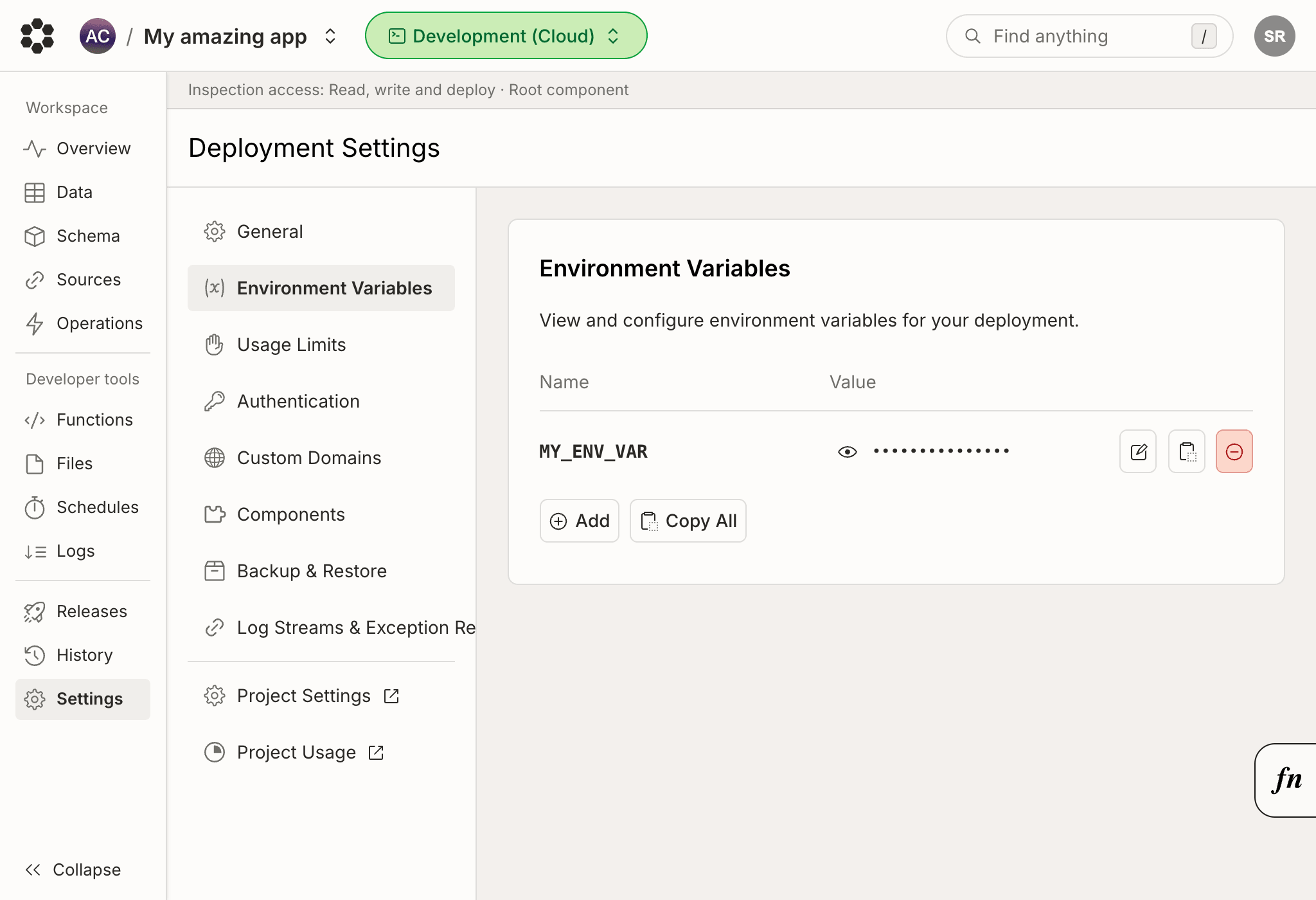
Usage Limits
The usage limits page lets you cap how much the deployment can consume per day or month. See Usage Limits.Authentication
The authentication page shows the values configured in yourauth.config.js for user
authentication implementation.
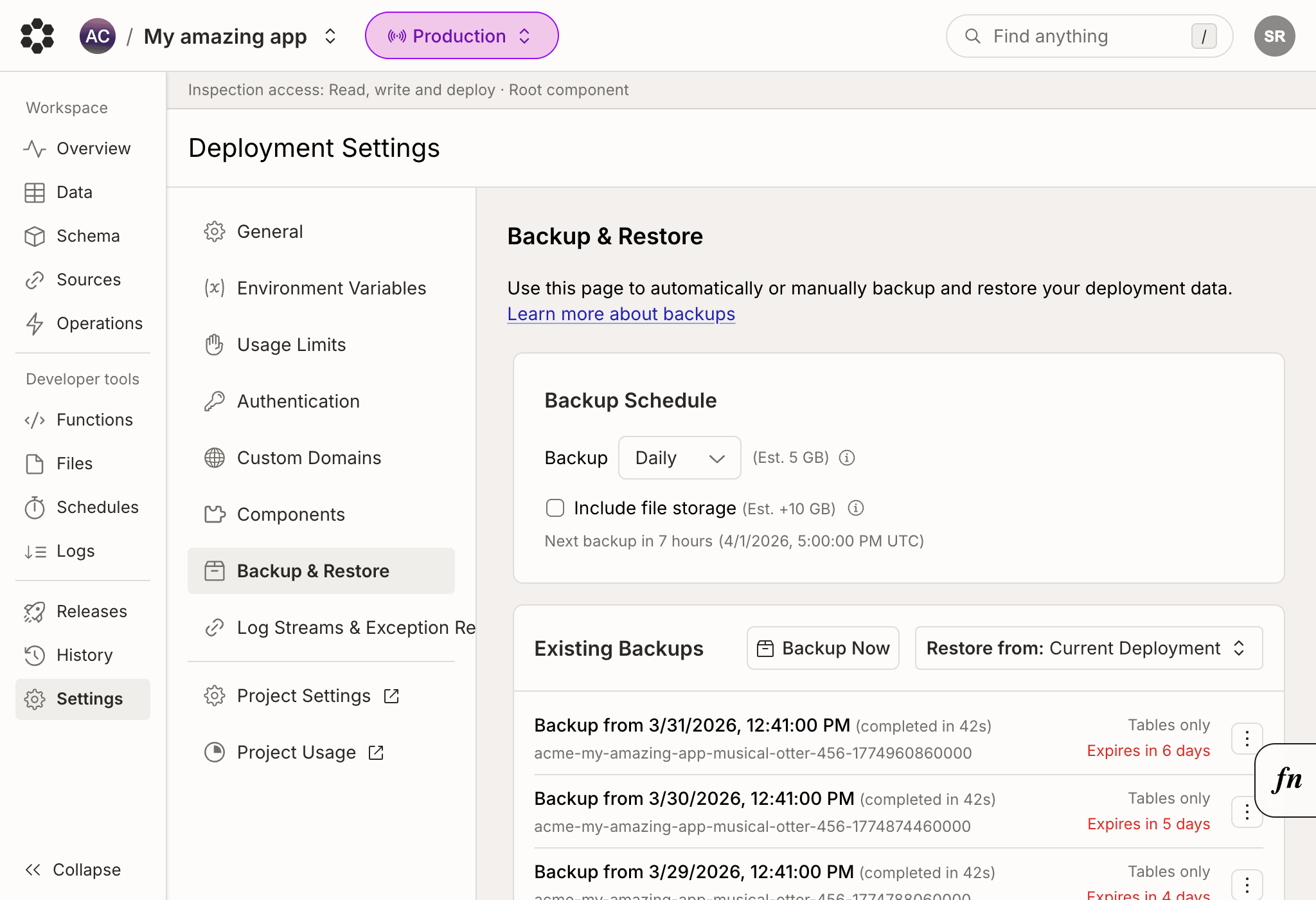
Backup & Restore
The backup & restore page lets you backup the data stored in your deployment’s database and file storage. On this page, you can schedule periodic backups.